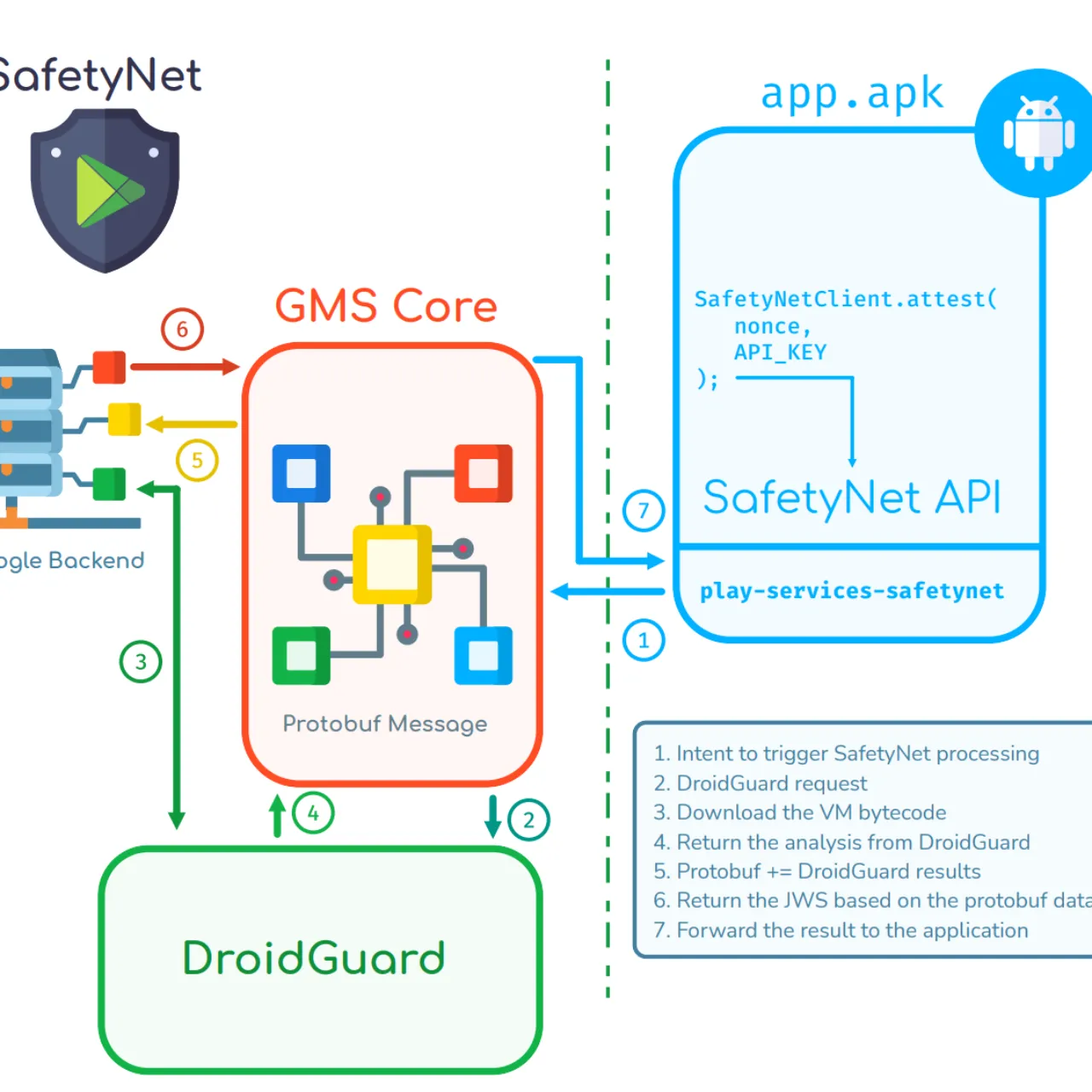
Reverse Engineering Google’s New VM-Based Integrity System: PairIP
🔰 Introduction
Google has always tried to stay ahead in the battle against Android app tampering and piracy. From the early days of License Verification Library (LVL) to SafetyNet and now Play Integrity API, each phase brought improvements in security.
However, with the emergence of advanced patching frameworks, Magisk modules, and Frida-based runtime hooking, traditional server-side integrity checks like SafetyNet are no longer enough. That’s where PairIP steps in — a virtual machine-based protection mechanism executed natively, with encrypted logic and extreme obfuscation.
📌 What is PairIP?
PairIP stands for “Pair Integrity Protection”. It’s a protection framework integrated into Android applications through a native shared library called libpairipcore.so. This system shifts the trust and verification logic from the cloud to the device.
PairIP doesn’t rely on Java or the Android framework for verification. Instead, it:
- Loads a native library
- Decrypts and loads a proprietary bytecode from
assets/ - Executes it inside a sandboxed VM loop
- Performs checks like root detection, emulator check, signature validation, etc., internally
📦 APK Structure with PairIP
The structure of an APK using PairIP generally includes:
lib/armeabi-v7a/libpairipcore.soassets/vm_payload.dat(or.enc,.ppk)classes.dex(basic stub Java code just to load native lib)AndroidManifest.xml(withandroid:hasCode="false"sometimes)
⚙️ How PairIP Works
- The app launches and immediately loads
libpairipcore.sousingSystem.loadLibrary. - The native library decrypts the VM bytecode stored in the assets directory using AES or custom XOR.
- The decrypted instructions are interpreted inside a native C++ virtual machine.
- The VM performs checks on the environment, validates the APK, verifies app signature, and may even handle license logic.
- If any tampering is detected, the app can crash, hang, or silently disable functionality.
🧠 VM Engine Architecture (Detailed)
This virtual machine isn’t like Dalvik or ART — it’s minimalist and purpose-built:
- Has internal opcodes like
LOAD_CONST,JUMP_IF_ZERO,CALL_NATIVE - Implements a tiny stack-based or register-based runtime
- Includes internal checksums to verify instruction integrity
- Can self-modify code during execution
- May use polymorphic bytecode: changes layout per build
🛡️ Advanced Anti-Reverse Engineering Features
Google has made PairIP a fortress against tampering by introducing:
- Encrypted Bytecode: No static analysis possible unless decrypted at runtime.
- Symbol stripping: All functions and variables in the SO file are unnamed.
- Runtime checks: Uses
ptrace,prctl,/proc/self/statusfor debugger detection. - Integrity validation: Uses FNV-1a or CRC32 to hash memory/code segments during execution.
- Dynamic obfuscation: Code flow changes every time app is built or packed.
- Frida detection: Checks memory for Frida server, intercepted syscalls, hooks on mmap/mprotect.
🧪 Real Reverse Engineering Techniques
Despite its strength, reverse engineers have had partial success by:
- Hooking
RegisterNativesvia Frida or Xposed to map native methods - Dumping in-memory decrypted bytecode after loading but before execution
- Using tools like
Frida-trace,Unicorn Engine,QEMUto simulate or emulate bytecode - Analyzing patterns of bytecode handlers (switch-case based or jump-table based)
- Using Syscall Tracing to detect when mmap/mprotect/decrypt occurs
🔁 Comparison Table: SafetyNet vs PairIP
| Feature | SafetyNet | PairIP |
|---|---|---|
| Execution | Remote (Cloud-based) | Local (Native VM) |
| Code Obfuscation | Minimal | High (Encrypted + VM) |
| Root Detection | Standard | Custom Native Logic |
| Frida Detection | No | Yes (Memory scan, syscall) |
| Reverse Engineering Difficulty | Medium | Very High |
📚 Conclusion: What This Means for Developers & Hackers
PairIP raises the bar in Android app protection. It’s not just harder to bypass — it’s intentionally built to be confusing, encrypted, dynamic, and tightly integrated into the app lifecycle.
For developers, it provides peace of mind — especially for finance, streaming, or subscription-based apps. For hackers and reverse engineers, it’s a new mountain to climb, one that demands advanced tools, creative strategies, and patience.
Reverse engineering PairIP isn’t impossible — but it’s time-consuming, complex, and resource-heavy.
Stay curious. Stay respectful. And always reverse ethically.
